
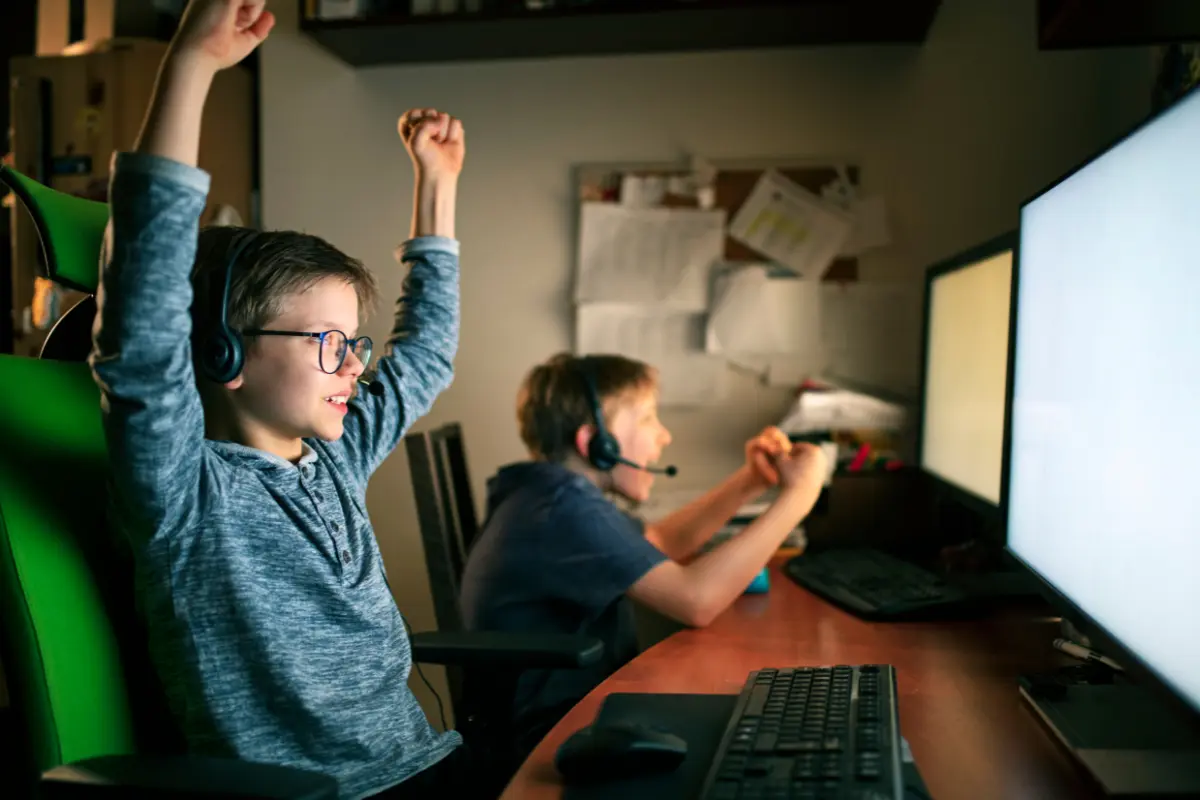
Online gaming is no longer just a time-pass activity. Today, millions of Indians play online games daily — from mobile puzzle apps to multiplayer battle games and strategy platforms. But one common question still comes up: Do online games actually improve brain skills?
The answer is — yes, they can. When played in the right way and in moderation, online games can sharpen your thinking, improve your memory, and even strengthen your decision-making abilities.
In this article, we will clearly understand how online games improve brain skills, what kind of games help the most, and how you can use gaming smartly for mental growth.
What Happens in Your Brain When You Play Online Games?
When you play online games, your brain does not switch off. In fact, it becomes highly active.
Different parts of your brain start working together:
- The frontal lobe helps you plan strategies and make decisions.
- The parietal lobe manages attention and spatial awareness.
- The hippocampus supports memory and learning.
- The motor cortex controls hand-eye coordination.
When you are playing, especially fast-paced or strategic games, your brain is constantly analysing, predicting, reacting, and adapting. Over time, this repeated mental exercise strengthens neural connections. Just like physical exercise builds muscles, mental challenges build brain strength.
Can Online Games Improve Memory?
Yes, online games can significantly improve memory — especially working memory.
What is working memory?
Working memory helps you temporarily store and process information. For example, remembering enemy positions in a battle game or tracking patterns in a puzzle game.
Many online games require you to:
- Remember rules, maps, or sequences.
- Recall previous moves or strategies.
- Track multiple elements at the same time.
Puzzle games, card games, and strategy games are especially powerful in boosting memory because they force you to actively think and recall information continuously.
If you regularly play games that challenge memory, you may notice improvement in daily activities too — like remembering tasks, instructions, or academic concepts.
Do Online Games Improve Concentration and Focus?
One of the strongest benefits of online gaming is improved concentration.
In most online games, if you lose focus even for a few seconds, you may lose the match. This trains your brain to stay alert and attentive.
Here is how it helps:
- Sustained attention improves because you stay focused for longer durations during gameplay. Over time, this ability can extend to studies or work.
- Selective attention develops because you learn to ignore distractions and focus only on relevant details, such as enemy movements or time limits.
- Visual attention becomes sharper as you learn to quickly scan the screen and identify important information.
For students and working professionals, this improved focus can be very useful in competitive exams, meetings, and problem-solving tasks.
How Do Online Games Enhance Decision-Making Skills?
Every online game involves decision-making. Sometimes you have only seconds to decide.
For example:
- Should you attack or defend?
- Should you invest resources now or save them for later?
- Should you choose risk or play safe?
These quick decisions activate your brain’s executive function system. Over time, you become better at analysing options quickly and choosing wisely under pressure.
Strategy-based online games are especially helpful in improving decision-making because they require long-term planning and resource management.
When you regularly practise strategic thinking in games, you may notice improvement in real-life decisions too — whether it is academic planning, financial choices, or career-related decisions.
Can Online Games Improve Problem-Solving Ability?
Yes, problem-solving is one of the biggest brain skills improved by online games.
Many games are designed around challenges. To win, you must:
- Understand the problem.
- Analyse the available tools.
- Try different solutions.
- Learn from mistakes.
- Adapt quickly.
This continuous cycle strengthens your logical thinking ability.
For example, puzzle-based games train you to identify patterns and think step-by-step. Adventure or mission-based games train you to analyse complex situations and find creative solutions.
When you practise problem-solving in a fun environment, your brain becomes more flexible. This cognitive flexibility helps in real-life challenges like project management, academic questions, and everyday problem-solving.
Do Online Games Improve Reaction Time?
Reaction time is the speed at which you respond to a stimulus.
Fast-paced online games require:
- Quick hand-eye coordination.
- Instant response to visual signals.
- Rapid decision-making.
When you repeatedly train your brain to respond quickly, neural pathways become more efficient. This improves reflexes and coordination.
Improved reaction time is helpful in:
- Sports and physical activities.
- Driving and road awareness.
- Competitive exams that require speed.
However, it is important to understand that improvement happens gradually with regular but controlled gaming.
How Do Online Games Improve Multitasking Skills?
Modern online games are rarely simple. You often have to:
- Watch multiple areas of the screen.
- Communicate with teammates.
- Manage resources.
- Track time.
- Execute strategies simultaneously.
This improves cognitive flexibility — the ability to switch between tasks quickly.
Multitasking in games trains your brain to handle multiple streams of information at once. Over time, this can help in real-life situations like:
- Managing office tasks.
- Handling studies and extracurricular activities.
- Managing deadlines and responsibilities.
But remember — multitasking skills improve when games are complex and strategy-driven, not when gameplay is repetitive or passive.
Are All Online Games Good for Brain Skills?
Not all online games improve brain skills equally.
Some games mainly focus on entertainment without much thinking. Others are mentally stimulating.
Games that typically improve brain skills:
- Strategy games – These improve planning, analysis, and long-term thinking.
- Puzzle games – These strengthen logical reasoning and memory.
- Simulation games – These enhance decision-making and resource management.
- Action games (moderately played) – These improve reaction time and visual attention.
However, excessive gaming can reduce benefits and cause negative effects like eye strain, poor sleep, and reduced productivity.
Balance is important.
How Much Online Gaming Is Healthy?
To truly benefit from online games improving brain skills, moderation is necessary.
Experts generally suggest:
- 30 minutes to 1 hour of focused gaming daily is sufficient.
- Avoid gaming before sleep.
- Take breaks every 20–30 minutes.
- Maintain physical activity and social interaction.
When gaming becomes addictive, benefits reduce. When gaming is controlled and purposeful, brain benefits increase.
The key difference is intention — are you playing mindlessly, or are you playing with awareness?
Can Online Games Help Students and Professionals?
Yes, online games can benefit both students and professionals when used wisely.
For students:
- Improved concentration helps in exams.
- Better memory supports academic learning.
- Faster decision-making improves competitive exam performance.
- Logical thinking supports mathematics and reasoning subjects.
For professionals:
- Strategic thinking helps in management roles.
- Problem-solving improves work efficiency.
- Quick analysis supports business decisions.
- Multitasking skills help in fast-paced environments.
Gaming should not replace learning or work. Instead, it can act as a mental workout that strengthens your cognitive foundation.
What Is the Science Behind Online Games Improving Brain Skills?
Scientific studies have shown that certain types of video games increase grey matter in brain areas responsible for spatial navigation, memory formation, and strategic planning.
When you repeatedly challenge your brain, neuroplasticity occurs. Neuroplasticity means your brain adapts and reorganises itself based on experiences.
Online games provide:
- Constant feedback.
- Immediate rewards.
- Increasing difficulty levels.
- Continuous engagement.
This keeps your brain in active learning mode.
But again, benefits are linked to balanced and mindful gaming.
How Can You Use Online Games Smartly for Brain Growth?
If you want to improve brain skills through online games, follow these practical tips:
- Choose games that require thinking, not just tapping or scrolling. Strategy and puzzle-based games are usually better for mental growth.
- Set a time limit before starting. This prevents overuse and keeps gaming productive.
- Reflect after playing. Think about what strategies worked and what mistakes were made. This strengthens learning.
- Combine gaming with other brain exercises like reading, physical activity, and social interaction.
When you treat gaming as mental training instead of pure entertainment, results improve.
Conclusion: Do Online Games Really Improve Brain Skills?
So, how online games improve brain skills becomes clear when looking at focus, memory, decision-making, reaction time, and problem-solving abilities.
Online games can:
- Improve concentration and visual attention.
- Strengthen memory and recall ability.
- Enhance strategic thinking and planning.
- Boost reaction time and coordination.
- Develop multitasking and adaptability.
However, the benefits depend on moderation, game type, and awareness.
If you play smartly and maintain balance, online games can become more than entertainment — they can become a powerful tool for mental development.
The next time someone says gaming is only a waste of time, you will know the science-backed truth.