
This domain is for sale. Anyone interested can reach out to
marketersmagical@gmail.com.
How Online Multiplayer Games Match Players
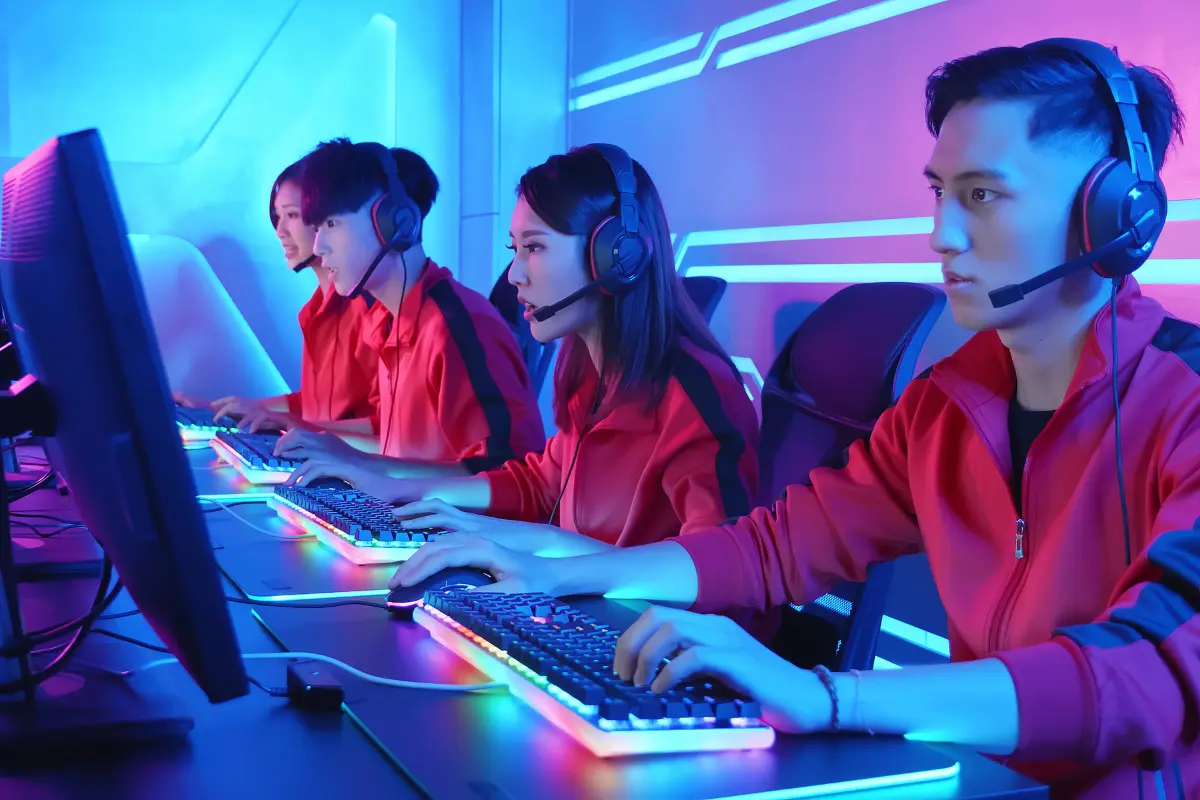
If you’ve ever played an online multiplayer game, you’ve probably wondered: how does the game decide who I play with? Sometimes matches feel perfectly balanced. Other times, they feel unfair or too easy.
This is not random. Behind every match is a system called matchmaking—a complex process designed to create fair, competitive, and enjoyable games.
In this guide, you’ll understand exactly how online multiplayer games match players, what factors they consider, and why your matches sometimes feel inconsistent.
What Is Matchmaking in Online Games?
Matchmaking is the system that selects players and groups them into a game session. Its main goal is simple:
- Make matches fair
- Keep games competitive
- Ensure you enjoy playing
Think of it like a smart organizer. It looks at your performance, your connection, and other players available at the same time, and then builds a match.
But this process is much more detailed than it sounds.
Why Matchmaking Matters More Than You Think
Without matchmaking, online games would feel chaotic.
Imagine:
- A beginner playing against a professional
- Players with slow internet matched with low-latency players
- Teams that are completely unbalanced
This would make games frustrating and drive players away.
Good matchmaking ensures:
- You get opponents at your level
- You improve gradually
- You stay engaged and motivated
In short, matchmaking is what keeps online games alive.
The Role of Skill-Based Matchmaking (SBMM)
The most important part of matchmaking is Skill-Based Matchmaking, often called SBMM.
This system tries to match you with players who are similar in skill level.
How does the game know your skill?
Games track your performance over time. They analyze things like:
- Wins and losses
- Score per match
- Kill/death ratio (in shooter games)
- Accuracy or contribution to the team
- Objective completion
Based on this data, the game assigns you a hidden rating. This is often called:
- MMR (Matchmaking Rating)
- Elo rating
- Skill score
You don’t always see this number, but it plays a huge role in who you get matched with.
What happens when you improve?
As you win more games:
- Your rating increases
- You face stronger opponents
If you lose:
- Your rating decreases
- You face easier opponents
This constant adjustment is why matches feel different over time.
Understanding Rating Systems (Elo and Beyond)
Most matchmaking systems are based on mathematical models.
Elo Rating System
Originally used in chess, Elo compares players and predicts who should win.
- If you beat a stronger player → big rating gain
- If you lose to a weaker player → bigger penalty
Modern Systems (like TrueSkill)
Many games use advanced versions of Elo.
These systems:
- Consider team performance
- Adjust for uncertainty (new players)
- Predict outcomes more accurately
For example:
- If you’re new, the system quickly tests your level
- If you’re experienced, it fine-tunes your rating slowly
This is why your first few matches in a new game can feel unpredictable.
Ping and Server Location: The Hidden Factor
Skill is important, but connection quality is equally critical.
What is ping?
Ping is the time it takes for data to travel between your device and the game server.
- Low ping = smooth gameplay
- High ping = lag, delays, poor experience
How matchmaking uses ping
The system tries to:
- Match you with players near your region
- Place you on a nearby server
But here’s the trade-off:
- A perfect skill match far away may cause lag
- A slightly uneven match nearby may feel smoother
So the game balances both factors.
How Teams Are Balanced
In team-based games, matchmaking doesn’t just find players—it builds balanced teams.
What does “balanced” mean?
The system tries to ensure:
- Both teams have similar total skill
- No team has a clear advantage
For example:
- Team A: 3 strong + 2 average players
- Team B: 3 strong + 2 average players
This makes the match competitive.
What if you play with friends?
When you join as a group:
- The game calculates your combined skill
- It may match you against another group
Sometimes, you might face stronger opponents because:
- Coordinated teams are more powerful than solo players
Queue Time vs Match Quality
Have you noticed that sometimes matches take longer to start?
This is because matchmaking is balancing two things:
- Match quality
- Waiting time
What happens behind the scenes?
When you enter a queue:
- The system looks for players very close to your skill
- If it doesn’t find enough, it expands the search
- It may include players slightly above or below your level
So:
- Quick matches may be less balanced
- Perfect matches may take longer
Games constantly adjust this balance to keep players satisfied.
Why Matches Sometimes Feel Unfair
Even with advanced systems, matchmaking isn’t perfect.
Here are some common reasons why your matches may feel unfair:
Skill Variation in Teams
Even if total team skill is equal:
- One team may have one very strong player
- The other may have evenly skilled players
This can change how the game feels.
Smurf Accounts
A smurf is an experienced player using a new account.
- The system thinks they are beginners
- They dominate matches
This creates imbalance until the system adjusts.
Inconsistent Performance
Your skill isn’t fixed.
- Some days you play better
- Some days you perform poorly
Matchmaking cannot predict your exact performance in every game.
Group vs Solo Players
Playing solo against coordinated teams can feel harder, even if skill levels are similar.
The Role of Behavior and Fair Play
Modern matchmaking systems also consider player behavior.
Games may track:
- Toxic behavior
- Reports from other players
- Quitting matches early
Some systems:
- Match toxic players with each other
- Reward positive players with better matches
This helps improve the overall experience.
Engagement-Based Matchmaking (A New Approach)
Some modern games go beyond fairness.
They use engagement-based matchmaking.
What does this mean?
The system tries to:
- Keep you playing longer
- Prevent frustration
- Maintain excitement
For example:
- If you lose several matches, the system may give you an easier match
- If you win too much, it may increase difficulty
The goal is not just fairness, but player retention.
What Happens When You Click “Play”
Let’s simplify the full process:
- You enter the matchmaking queue
- The system checks:
- Your skill rating
- Your location and ping
- Whether you are solo or in a group
- It searches for suitable players
- It builds teams
- It selects a server
- The match begins
All of this happens in seconds.
Tips to Get Better Matchmaking Experience
While you can’t control matchmaking completely, you can improve your experience.
Play consistently
Your rating becomes more accurate over time.
Avoid frequent quitting
Leaving matches can affect your experience and behavior rating.
Play with friends wisely
Balanced groups often lead to better matches.
Focus on improvement
As your skill improves, matchmaking becomes more satisfying.
The Future of Matchmaking
Matchmaking is constantly evolving.
In the future, systems may:
- Use AI to predict player behavior
- Create more personalized matches
- Balance fun and fairness even better
Games are becoming smarter in understanding players—not just their skill, but their preferences and play style.
Final Thoughts
Online multiplayer matchmaking is a complex system designed to make your gaming experience enjoyable.
It considers:
- Your skill level
- Your connection quality
- Team balance
- Waiting time
- Even your behavior
While it may not always feel perfect, it is constantly working in the background to give you the best possible match.
The next time you enter a game, remember: it’s not random. A detailed system has carefully selected your opponents and teammates.
And understanding this can help you play smarter, stay patient, and enjoy the game more.